
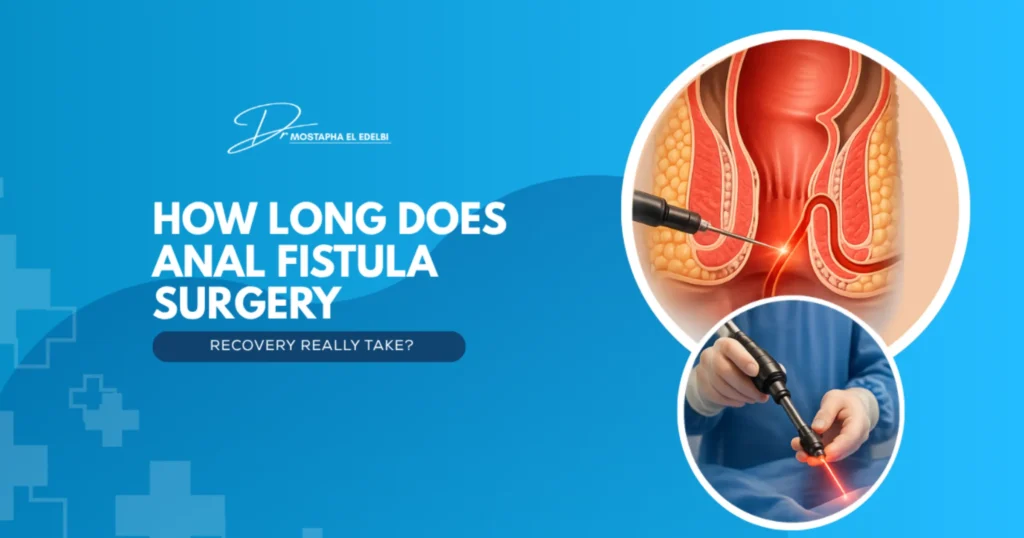
Anal fistula surgery recovery can feel uncertain, particularly if you are not sure what to expect. You can be mentally and physically prepared for the recovery phase by knowing what to expect. It will help you have a smoother and less stressful healing process.
The total healing generally takes anywhere from 4 to 12 weeks. However, the reality is, the healing time depends heavily on the type of surgery you have and how well you manage your post-operative care. Here is what you can expect on your journey to recovery.
The True Recovery Timeline: Fistula Wound Healing Stages
Recovery does not happen in a day, it happens in separate phases. Knowing the fistula wound healing stages can help you to track your progress and ease anxiety.
Stage 1: The Acute Phase (Days 1–7)
This is the first inflammatory phase. Expect the surgical site to be sore and you will probably see swelling and a fair amount of pinkish-red discharge or blood. If your surgeon has performed the fistulotomy (cutting the tunnel open so it can heal from the inside out), your wound will be left to heal open. If a seton (silk or silicone string) was placed it would drain continuously.
Stage 2: Tissue Regeneration (Weeks 2–4)
In this proliferative phase, new healthy “granulation tissue” starts to fill the wound bed from the bottom up. The stabbing, burning pain turns into a dull ache or itch, which is the classic sign of healing. The discharge changes from blood to a yellow serous fluid.
Stage 3: Maturation and Closure (Weeks 5–12)
The edges of the wound start to close and the new tissue begins to get stronger. Simple fistulas: You could be all healed by week 6. Complex fistulas involving deeper sphincter muscles may take 12 weeks or longer for the deep tissue to fully mature.
The Blueprint for Fistula Surgery Aftercare
Your fistula surgery aftercare is what determines how quickly you recover. Your main goal is to keep the wound neat and devoid from infection and to eat fibers to have a good bowel movement.
- Sitz Bath: Sit in a tub of warm water for 15-20 minutes, 2 to 3 times a day, always after a bowel movement. This will keep the area clean, relax the sphincter muscles and dramatically reduce the pain.
- Keep the area dry: Use a clean towel to gently pat the area dry, or use a hairdryer on the “cool” setting after a sitz bath because bacteria breed in moisture.
- Prevent constipation: Straining during bowel movements can tear the healing tissue. Maintain a fiber rich diet or fiber supplements prescribed by your doctor religiously.
How to Heal Faster After Fistula Surgery
If you’re wondering how to heal faster after fistula surgery, focus on these two pillars: diet and activity management.
What foods should I eat during anal fistula recovery?
- High Fibre Foods: Eat plenty of whole grains, oats, avocados, berries, broccoli and lentils.
- Hydration: Have 8 to 10 glasses of water each day. For fibre to work its best, drink lots of water with it, or it can backfire and cause constipation.
- Lean Proteins: Your body needs the amino acids from lean chicken, fish, eggs, and tofu to rebuild tissue during the stages of fistula wound healing.
What activities should I avoid during recovery?
To protect the surgical site, you should strictly avoid:
- Heavy lifting, running, or strenuous exercise for at least 2 to 4 weeks.
- Cycling or horse riding, which puts direct friction and pressure on the wound.
- Do not swim in a pool, hot tub, or open water until your surgeon has confirmed that the wound has fully healed.
When to Seek Professional Help
While recovery is usually smooth, consult your doctor if you notice:
- Severe or increasing pain
- Excessive bleeding
- Fever or signs of infection
- Delayed healing beyond expected time
A timely follow-up with a qualified fistula specialist Dubai can prevent complications and ensure proper healing.
Conclusion
Anal fistula surgery recovery takes time but with proper management it is predictable and manageable. Understanding healing stages, following proper fistula surgery aftercare, and maintaining a healthy lifestyle can help you recover comfortably and reduce the risk of recurrence. The keys to a smooth recovery journey are patience, consistency, and proper medical guidance.
Connect with Dr. Mostapha El Edelbi now to seek medical advice: +97158 182 4633
FAQs
Is anal fistula surgery recovery painful?
Mild to moderate pain is normal at first but can be managed with medication and proper care.
When can I sit normally after fistula surgery?
Most patients can sit comfortably within 1–2 weeks, depending on healing progress.
What foods should I eat during anal fistula recovery?
Fibre rich foods, fruits, vegetables and loads of water are great for easy bowel movements.
What activities should I avoid during recovery?
Avoid heavy lifting, strenuous exercise, prolonged sitting, and any activity that strains the surgical area. Is bleeding normal after anal fistula surgery?
Yes, slight bleeding or discharge is normal in the early days but should gradually decrease.