
Hernia Surgery in Dubai by Dr. Mostapha El Edelbi

Hernia Surgery in Dubai: Causes, Risks and Treatment Options
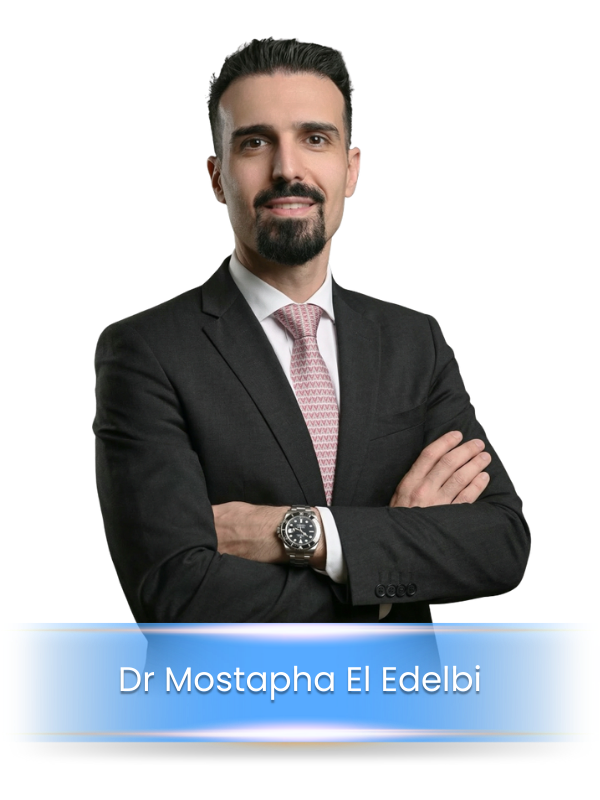
When an organ or tissue pushes through a weak area in the muscle or connective tissue that is called hernia. The most common types are inguinal, umbilical, and ventral hernias. Depending on the type and severity, some hernias can be asymptomatic or just produce slight discomfort along with a visible bulge, while others get worse and have pain, and also serious complications if left untreated. Dr. Mostapha El Edelbi, a reliable hernia surgeon in Dubai, specializes in repairing the weakened area to prevent it from recurring. In addition to that, he uses minimally invasive techniques which result in less pain for the patients, quicker recovery time, and better surgical outcomes.
Surgical Care for Hernias: Open and Laparoscopic Methods
In open hernia surgery, a small incision is made near the hernia. The weakened area is carefully repaired, and a mesh may be used to strengthen the tissue and reduce the risk of recurrence. For laparoscopic hernia surgery in Dubai, Dr. El Edelbi makes two to four tiny cuts on the abdomen. A small camera, along with special instruments are applied to the hernia repair. The surgeon will keep an eye on the operation through a monitor. This small surgery usually causes less pain, smaller cuts, and faster healing, so patients can get back to their normal lives sooner.

Who Needs a Hernia Surgeon in Dubai
Hernias can affect anybody, but some people are at a higher risk than others. If the symptoms become more critical and worsen, men have a higher chance of suffering from inguinal hernias. That’s why sometimes they require inguinal hernia surgery. Apart from this reason, excess body weight can put pressure on the abdominal muscles, which increase the risk of hernias slowly.
Over time, coughing that lasts a long time, straining that occurs frequently, or constipation that is chronic and can cause the abdominal wall to become weakened. This weakening can result in an umbilical hernia treatment. People who had past abdominal surgeries may develop hernias near old incision sites, which usually need repair with ventral hernia surgery. A hernia is a condition that requires medical advice to take proper care. If it is not treated, it can get larger, become painful, and even lead to more severe health problems. First checking by a doctor is the starting point for quick intervention, which is mostly through keyhole hernia surgery that offers faster recovery, less pain, and better results.
Advanced Minimally Invasive Surgical Care for Hernia in Dubai
Modern surgery is not only about treating a condition. Patients today also look for less pain, smaller scars and a recovery process that allows them to return to normal life as soon as possible. Dr. Mostapha El Edelbi is a trusted scarless surgery expert Dubai and focuses on advanced minimally invasive techniques to make your hernia surgery safer, smoother and less stressful.
So you will experience:
- Less visible scarring
- Reduced recovery time
- Lower post-operative discomfort
- Faster return to daily activities
Advanced Surgical Support Beyond Hernia Treatment
Many abdominal conditions slowly become worse when ignored for too long. It starts to affect daily activities, movement and overall quality of life. As an experienced abdominal surgery specialist Dubai, Dr. El Edelbi provides careful evaluation and personalized treatment plans based on each patient’s condition and recovery goals.
His approach focuses on:
- Accurate diagnosis
- Clear explanation of treatment options
- Minimally invasive surgical solutions
- Structured recovery guidance
Patients will receive professional support throughout every stage of treatment and also follow-up care.
Restoring Daily Comfort with Hemorrhoid Treatment Dubai
Hemorrhoids are a medical problem that causes pain, inflammation, irritation and sometimes even bleeding around the rectum or anus. Patients usually delay treatment due to embarrassment about their condition or fear that surgery will be needed in all cases. But modern hemorrhoid treatment Dubai has changed this situation a lot.
Depending on the severity of the condition, treatment may include:
- Lifestyle and dietary recommendations
- Non-surgical treatment methods
- Minimally invasive procedures
- Surgical care for advanced cases
The goal is always to reduce discomfort, improve daily comfort and support faster recovery with minimal interruption to normal life.
Hiatal (Gastric) Hernia Surgery in Dubai
Hiatal hernia occurs if any part of the stomach comes out through the diaphragm to enter the chest cavity and causes acid reflux, heartburn and swallowing problems. Hiatal Hernia assessment and treatment by Dr. Mostapha El Edelbi is a specialized service provided for patients in Dubai that enables them to know about the treatment alternatives for their condition.
Treatment Approach: Treatment will depend on the lifestyle changes and condition of the hernia and will involve medication or surgery. Surgery if required can be done using a minimally invasive approach to repair the hernia and restore stomach position again.
Abdominal Wall Hernia Treatment in Dubai
A hernia in the abdominal wall occurs due to the pushing out of tissue in a weak part of the abdomen muscles and may even create a visible lump. So Dr. Mostapha El Edelbi provides personalized evaluation and surgical management for the problem of abdominal wall hernias in Dubai.
Treatment Approach: Repair can be performed through laparoscopy or an open surgery method depending on the individual hernia problems . The main aim of the treatment is to strengthen the weak area and decrease complications through proper guidance and recovery support.
Why Choose Dr. Mostapha El Edelbi for Hernia Surgery
Dr. Mostapha El Edelbi is a board-certified general and laparoscopic hernia surgeon in Dubai. He possesses considerable international training and, besides that, has extensive experience in the field of both open and laparoscopic hernia surgery. He is known for safe and patient-centered treatments. Each patient he treats goes through the process of being informed about the alternatives based on the patient’s condition, lifestyle, and recovery objectives. The technique that he uses causes less pain, keeps the skin limit scars, and patients can return to their normal lives sooner than expected. He not only guides but also supports you throughout the entire process, from the first consultation to full recovery. So that you always know what to expect. His SAGES certification and ACGME-I training reflect the highest standard of surgical care worldwide. He also has an MBA, which is an asset in making informed, patient-centered decisions.

What to Expect Before and After Hernia Surgery
Before surgery, Dr. El Edelbi carefully assesses your overall health, hernia type, and individual surgical needs. Then, a safe surgery and an appropriate treatment plan will be made. From the first consultation, those who are searching for the best hernia doctor near me get clear direction, easy preparation steps, and a total understanding of what to expect. After the operation, the majority of patients feel less pain and have less swelling, especially if they had minimally invasive surgery. Recovery is smooth and well supported. Usually, light activities can be started very early, which helps you return to daily life. He provides clear guidelines regarding food, exercise, and restrictions during the healing process. Long-term care focuses on hernia prevention. Patients are given practical lifestyle advice along with follow-up care to preserve the results. If the support is correct, the healing process becomes simple, a lot of self-confidence comes back, and daily activities are not hard anymore.
Frequently Asked Questions
- Inguinal hernia – Most common. Happens in the groin.
- Umbilical hernia – Around the belly button.
- Incisional hernia – At the site of a previous surgery.
- Hiatal hernia – Upper stomach pushes into the chest.
- Femoral hernia – More common in women. Also in the groin area.
Inguinal hernia is the most common in adults.
Not every hernia needs emergency surgery. But most hernias do not heal on their own. If the bulge is painful, growing in size, and you are feeling discomfort while lifting or coughing, the hernia becomes hard and cannot be pushed back. It will be more serious if you have nausea or vomiting, and the pain is increasing. That’s urgent. Don’t delay.
Open and laparoscopic hernia surgery are two different ways. In open surgery, the doctor makes one big cut to repair the hernia directly. It is for complicated hernias, and recovery may take a little longer.
In laparoscopic surgery, the doctor makes 2–3 small cuts and uses a small camera to fix the hernia. This usually means less pain, smaller scars, and quicker recovery. Both methods are safe. The best option depends on your hernia and your doctor’s advice.
In most adult cases, yes. Surgical mesh strengthens the weak area, reduces recurrence risk, and improves long-term results. Small hernias in young patients sometimes don’t need mesh. But for most adults, mesh is the standard approach.
It depends on the type of surgery. Laparoscopic 1–2 weeks for light activity. Open surgery 2–4 weeks, but heavy activities after 4–6 weeks.
Yes. But it’s not common if you treat it properly. Recurrence depends on surgical technique, use of mesh, patient weight, smoking habits, and involvement with heavy work.
If you delay the treatment, you have to suffer more pain due to the enlargement of the hernia, bowel obstruction, and strangulation. A strangulated hernia is an emergency. It requires urgent surgery. Don’t ignore these symptoms.
Consult a specialist if you notice a visible bulge, feel groin or abdominal pain, or discomfort increases when standing or lifting. If you’re unsure about your symptoms, it’s better to get checked once rather than wait for complications.
A hiatal hernia occurs when part of the stomach pushes through an opening in the diaphragm into the chest cavity. It may cause symptoms such as heartburn, acid reflux, chest discomfort or difficulty swallowing but some people have no noticeable symptoms.
An abdominal wall hernia develops when tissue, such as fat or part of the intestine, protrudes through a weakened area in the abdominal muscles. It commonly appears as a bulge and may cause discomfort or pain, particularly during coughing, lifting or physical activity.