
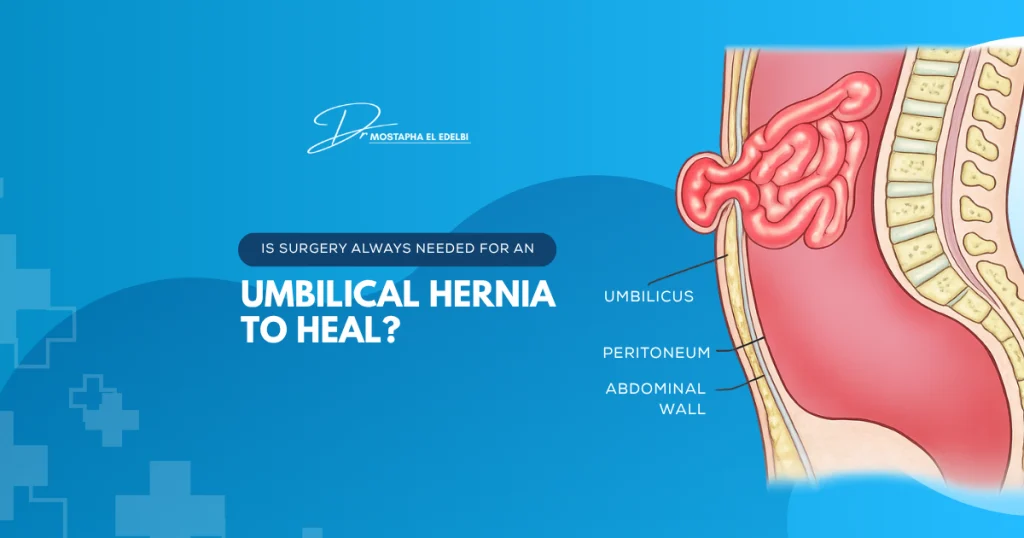
An umbilical hernia is a common condition that can affect children as well as adults. It happens when some part of the fat tissue bulges through a weak area in the abdominal muscles. Some patients feel just a painless lump while other people feel pain when they are doing physical activities. Then the question arises whether surgery is the only option or there is any possibility of improvement without surgery. This guide helps you understand the treatment for an Umbilical Hernia and know when it is time to seek medical advice.
Understanding an Umbilical Hernia
This type of hernia occurs if any tissue comes out through a weak area in the abdominal muscles. The lump becomes prominent when you cough, laugh, stand for a long time or lift heavy objects. But it can be reduced when lying down in some cases commonly seen in babies.
Umbilical hernia in adults is also common. Childhood hernias have a tendency to resolve naturally due to muscle development but adult hernias generally cannot be healed without surgery. They can stay the same size or sometimes get bigger if not treated.
Can an Umbilical Hernia Heal on Its Own?
Can an umbilical hernia heal without surgery? This is one of the most common questions patients ask.
The answer to this question is generally no when we consider adult patients. Because the hernia is not going to get fixed on its own once the weakening happens in the abdominal wall and the hole that develops in the muscle tissue stays as it is or even gets bigger.
Some people live with a small hernia for years without major discomfort. But this does not mean that the hernia has healed. It simply means that the condition is not causing significant symptoms at that time. Regular medical evaluation is important to monitor any changes and determine the most appropriate treatment for an Umbilical Hernia.
Is Surgery Always the First Option?
Sometimes surgery is not immediately needed when a hernia is diagnosed. The first thing the doctors do is check the size as well as the symptoms that the patient is experiencing. Then the doctor will advise monitoring it regularly without performing any surgery in cases where the hernia is small and painless.
The goal is to choose the right treatment for an Umbilical Hernia based on your condition instead of following the same approach for every patient.
When Is Surgery Recommended?
Many patients ask, when is umbilical hernia surgery necessary?
Surgery is usually recommended when the pain starts or the problem begins to interfere with your daily activities. It is also suggested that the tissue inside the hernia can get stuck. This will decrease the amount of blood flowing to the tissue.
So there are high risks of complications if you ignore this. Consulting a doctor in time gives you an idea of your situation before it becomes worse.
What Does Umbilical Hernia Repair Involve?
The surgical procedure for umbilical hernia repair closes the weakness in the abdominal wall. This surgery can be conducted using minimally invasive laparoscopic techniques or through an open surgery method.
Advantages of minimally invasive surgery include small incision marks, reduced pain and quicker recovery time. The best type of surgical technique will depend on the size of the hernia and the general condition of your body. Your surgeon will be in the best position to suggest the best option that your body needs.
Why Early Medical Assessment Matters?
Some patients ignore a small bulge that is not painful at all. But managing the condition might be challenging when signs appear in advanced stages. Early evaluation will enable your doctor to keep track of the problem and advise when the appropriate time for treatment is.
So it is also necessary to consult with a doctor in case you observe swelling around your navel. Since it keeps changing its size and becomes uncomfortable. This will enable the doctor to know what is best for you.
Choosing an experienced surgeon can also help you receive an accurate diagnosis and a personalized treatment plan based on your symptoms and medical history when you are looking for a Hernia specialist in Dubai.
Treatment for an Umbilical Hernia in Dubai
Finding the right Umbilical hernia treatment in Dubai starts with a detailed consultation and careful evaluation. Every patient is different. So treatment should always be tailored to each condition rather than following a single approach.
The best surgeon will be able to evaluate the size of the hernia and consider the symptoms that you have as well as your overall health status before suggesting the best treatment for you. Minimally invasive techniques may provide a safe and effective solution with a smoother recovery for suitable patients when surgery is required.
Recovery After Treatment
The process of recovery will vary depending on the nature of surgery and the overall history of the patient. The patient can start going back to their normal activities once the instructions given by the doctor are followed in some cases.
But it is crucial that the patient should avoid lifting any heavy objects and doing any hard activity until they fully recover.
Conclusion
Not all cases of Umbilical Hernia need emergency surgery but no one should ever be overlooked. The right treatment for an Umbilical Hernia depends on the size of the hernia, the symptoms of the patient and any risk factors involved. If you feel a bulge in the area of your navel or are feeling discomfort in the abdomen that is not relieved, then consulting a doctor becomes your first concern.
Want to see an experienced hernia surgery specialist in Dubai? Call Dr. Mostapha El Edelbi +97158 182 4633 now!
FAQs
Can an umbilical hernia heal without surgery?
No. An umbilical hernia does not heal on its own in adults because the weakness in the abdominal wall remains. A doctor can recommend the most suitable treatment based on your condition.
Is surgery always necessary for an umbilical hernia?
No. Small and symptom-free hernias may only need monitoring. Surgery is recommended if the hernia causes pain, grows larger or has a risk of complications.
What happens if an umbilical hernia is left untreated?
It may become larger over time and increase the risk of complications, including trapped tissue that may require emergency treatment.
When do doctors recommend surgery for an umbilical hernia?
Doctors recommend surgery if the hernia is painful, increasing in size, affecting daily activities or showing signs of complications.
Are there any non-surgical treatments for an umbilical hernia?
No. Surgery is the only treatment that permanently repairs an umbilical hernia in adults. Small hernias may only be monitored if they are not causing symptoms.
How long does it take to recover after umbilical hernia surgery?
Recovery varies from person to person but most patients gradually return to normal activities by following their surgeon’s advice.
Is umbilical hernia surgery safe for adults?
Yes. It is generally a safe and commonly performed procedure when carried out by an experienced surgeon.